
傳承規劃是指個人在世時就其資產的管理及處分進行預測及安排的過程,為其將來可能喪失行為能力或過世作準備。雖然傳承表面上看似簡單,但許多人卻因各種緣由在傳承規劃時備感艱難,對於那些已積累大量財富的人士(本書簡稱其為「創富者」)來說尤其如此。 對於成員位於多個司法管轄區的家族(通常稱為「跨境家族」),傳承規劃可能更加艱巨。本書旨在為家族成員及資產分布於多國之創富者提供可行的解決方案。
第一章 何謂跨境資產規劃?
傳承規劃是指個人在世時就其資產的管理及處分進行預測及安排的過程,為其將來可能喪失行為能力或過世作準備。雖然傳承表面上看似簡單,但許多人卻因各種緣由在傳承規劃時備感艱難,對於那些已積累大量財富的人士(本書簡稱其為「創富者」)來說尤其如此。
對於成員位於多個司法管轄區的家族(通常稱為「跨境家族」),傳承規劃可能更加艱巨。本書旨在為家族成員及資產分布於多國之創富者提供可行的解決方案。
對於在美國擁有資產、或後代有美國公民身分或美國綠卡的非美國人來說,傳承規劃需考慮的各項成本及法律、會計相關費用皆相當可觀。此外,每個創富者的個別情況不同,而傳承規劃的過程亦可能隨著時間推移而改變,進而無法預測。即使每位創富者之傳承規劃方法應客製化,但我們認為,瞭解其他創富者所使用的常見架構也極具參考價值。
傳承規劃應就每一個案的具體情況來量身訂製,這也就是為甚麼現今有整個行業專注於財富及傳承規劃。根據我們的經驗,亞洲家族在傳承規劃上經常遇到同樣的問題,也有類似的擔憂。
對在亞洲擁有大量資產的創富者來說,最常見的情境為:
1. 已移民至美國;
2. 其配偶及/或後代亦已移民到美國;或
3. 已將其亞洲全部或部分財富轉移到美國投資。
在完成身分變更(成為美國人)或資產轉移(到美國)時,創富者不全然能瞭解可能涉及的法律及稅務後果,因此,亞洲創富者經常透過在美國及大中華區聘請專業人士試圖解決這些問題。
有些創富者甚至會採納四大會計師事務所或大型知名的國際型律師事務所的建議。依據我們的經驗,委任這些顧問很少能產生有效且具成本效益的結果。許多前述的事務所在實務上往往很難掌握多個司法管轄區相關法律規範的全貌。
使情況更加複雜的是,美國律師事務所及會計師事務所的從業人員只專注於他們擅長的傳承規劃領域,當涉及到其他傳承規劃領域的問題時,通常會轉而尋求其他合格專業人士的意見。遺憾的是,這通常會導致客戶收到低於標準的結果、相互矛盾的意見以及高昂的費用。本書在這方面可發揮作用,書中所舉的每個案例均已實際運用在有類似情況、疑問及擔憂的創富者身上。
本書主筆已為自己及家人設立多個信託;不僅創建書中大多數的財富傳承架構,且至今也仍持續進行更新、維護及優化。有別於其他執業人士僅能證實其客戶的成功案例,本書的主要作者已實際運用書中的財富傳承架構,故得以暢談該架構的成效。
創富者應將他們的財富傳承策略視為核心任務,並優先制定永續性的計劃,得以將其資產傳承予其後代。雖然理解關鍵概念會有所助益,但案例研析通常是確實瞭解傳承規劃及財富交替的最佳方式。以下我們提供五個案例研究,以協助創富者思考其信託規劃。
案例背景:
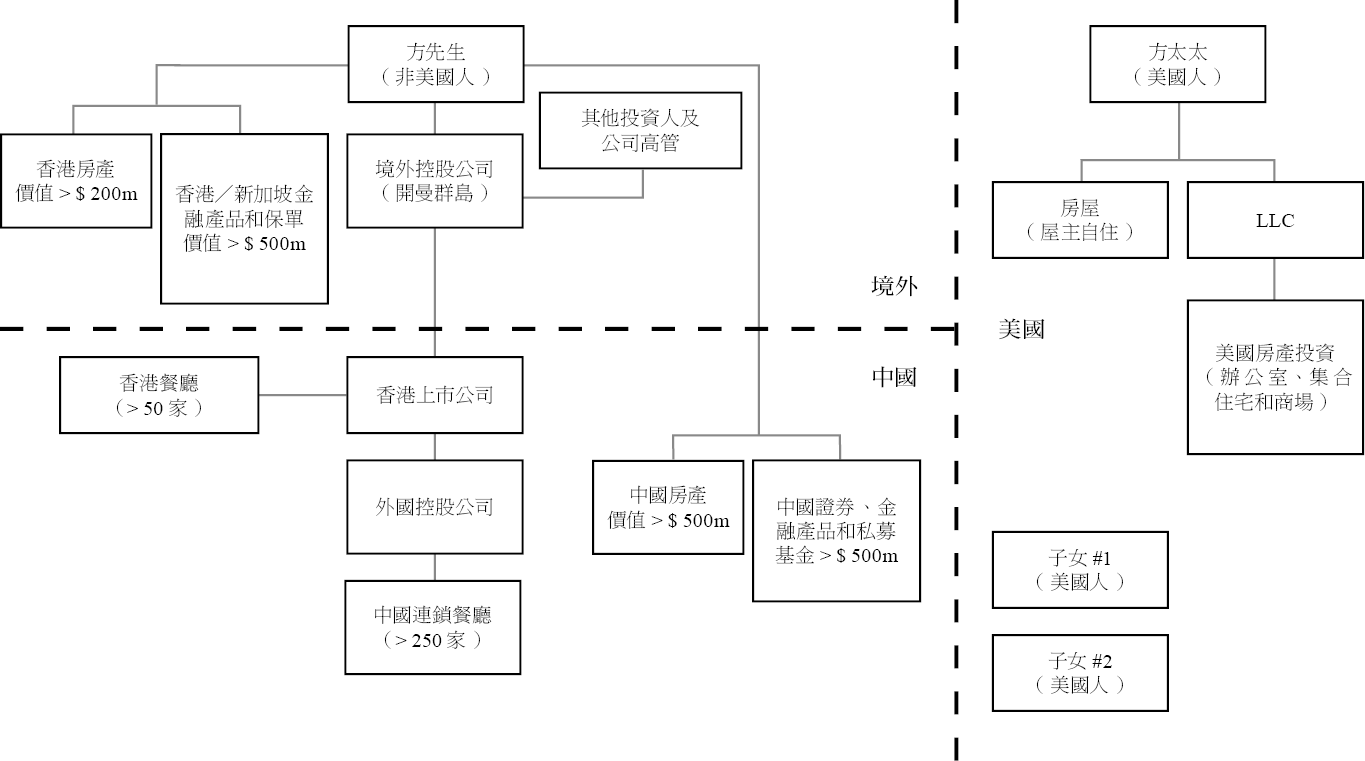
剛滿65歲的方先生是一家上海大型餐飲集團(掛牌公司)的創辦人。方先生從小家境普通,因而他在財務上一直非常謹慎,他將經營業務的所得主要投資於中國的低風險金融商品及房地產。方先生在2015年以妻子的名義在加州購置一棟房產,其妻兒已在洛杉磯生活多年。多年來,方先生多次贈與金錢給方夫人,而方夫人將這些資金投資於一家持有美國辦公大樓及購物中心股權的有限責任公司。方先生的妻兒雖已取得美國綠卡,但目前方先生仍未申請移民,所以身分上為非美國人(即美國稅法上的非居住在美國的外國人)。
下圖為方先生在傳承規劃前的資產:
規劃要點:
1. 方先生在中國擁有多項資產。若中國實行遺產稅及贈與稅制度,方先生很大一部分資產可能會被課稅,故可能導致方先生為了繳稅而須出售家族資產(可能包括其掛牌公司的股份)。
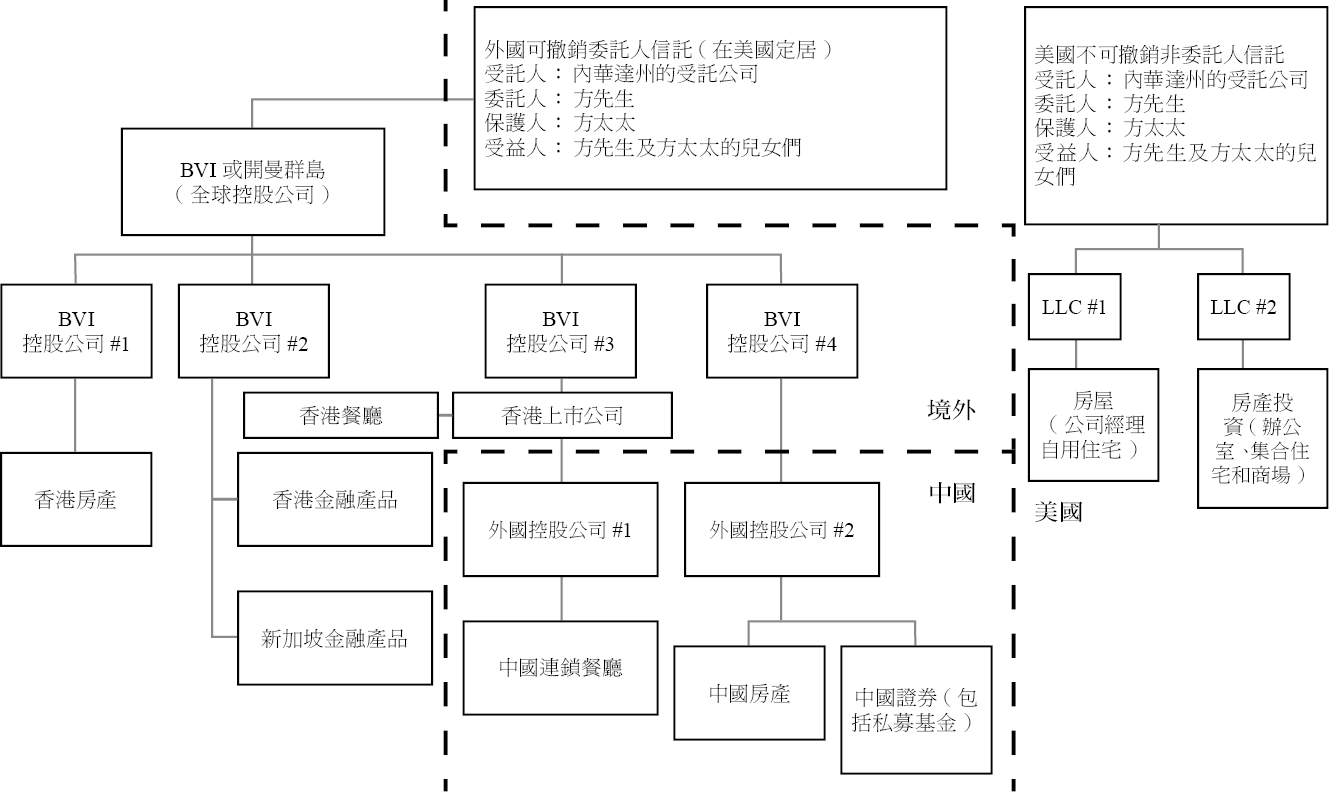
2. 由於多位家族成員已移民美國多年,方先生希望能將更多資產轉移到美國。若方先生也想申請移民美國,應該考慮在移民前轉移其資產。美國不可撤銷信託可以作為一絕佳工具來持有他目前由香港或新加坡的離岸公司持有的資金。另一方面,在方先生逝世或移民之前,美國可撤銷信託亦可作為其透過離岸公司所持有中國資產或其他公司的工具。
3. 當方先生對在美國的妻兒進行贈與時,必須慎重考量其所涉及的美國贈與稅及遺產稅。若方夫人在美國持有的資產達一定規模,當她隨著時間從方先生獲得額外的資產時,她可能要負擔美國的贈與稅或遺產稅。因此,我們建議方先生在美國設立不可撤銷信託並將其資產轉移至信託,藉此最小化家族在美國遺產稅上的曝險程度,並使資產更平順地傳承給後代。
4. 若方先生擬對在中國的經營團隊成員授予股權作為激勵報酬,建議以中國的外商投資企業股份為標的;如擬對在中國境外的經營團隊成員授予股權激勵,建議以在英屬維京群島註冊的控股公司之股份為標的。
5. 方先生應考慮重組其在中國所擁有的投資資產。由於緊縮性的貨幣管制,將資產轉移出中國已變得困難。如有合適的時機,方先生應考慮將其中國資產的所有權移轉予多家離岸公司,以利於將資產轉移給後代。在專業人士的協助下,通常可藉由直接移轉、預先規劃的融資安排及贈與來達成此一目的。
經傳承規劃後,方先生的資產如下圖所示:
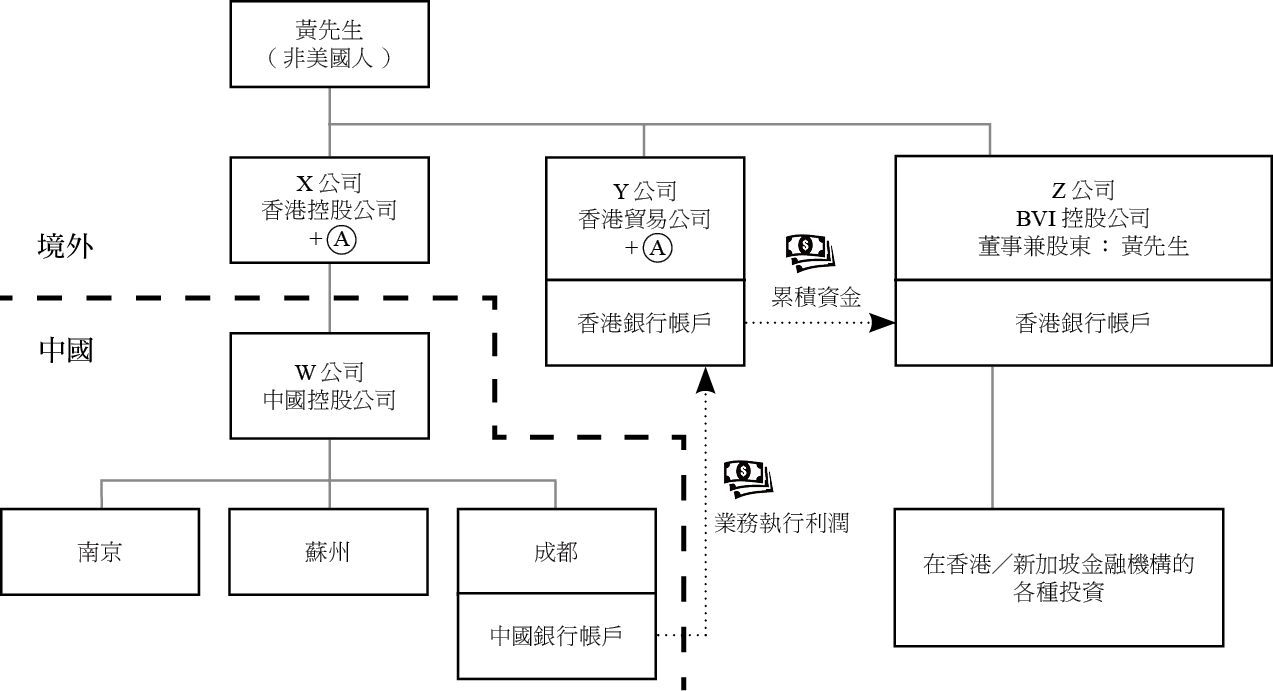
黃先生是中國公民,沒有任何移居美國的計劃,但他的妻子及子女們都在美國,並擁有美國國籍。多年來,黃先生逐漸意識到有必要制定計劃,使他能夠有效地將自己的資產移交給後代;然而,礙於既有投資架構的複雜性,他不確定該如何進行。
具體而言,黃先生有以下疑問:
下圖為黃先生在傳承規劃前的資產:
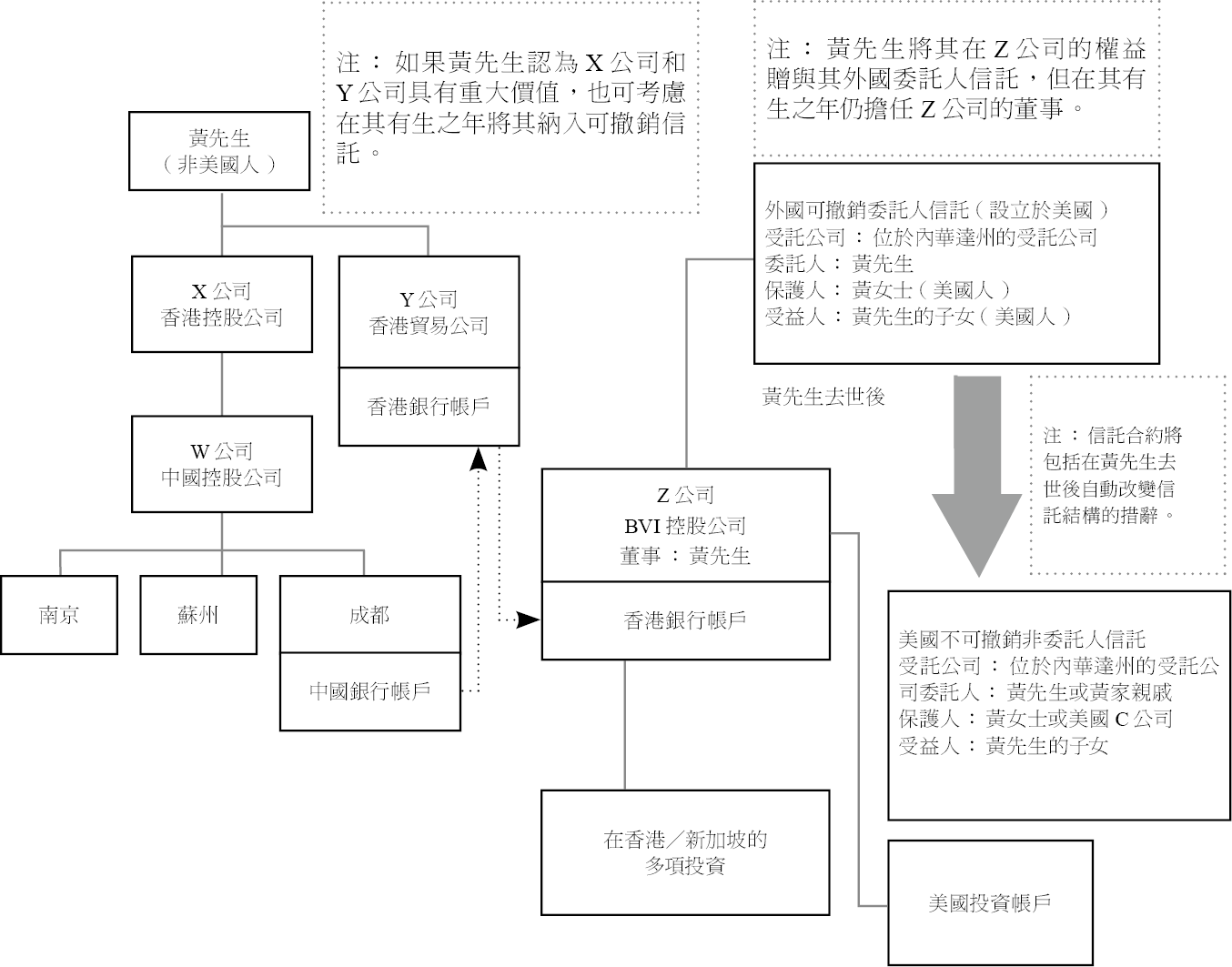
經傳承規劃後,黃先生的資產如下圖所示:
分析:
1. 中國的創富者若希望將其商業利益移轉給後代,首先必須意識到資產重組的重要性,而這通常是透過移轉其閉鎖性企業的股權給在香港、英屬維京群島或開曼群島的離岸公司來實現。由於黃先生的妻子及子女們已移民到美國,若他希望最終能將資產轉移給家人,對他而言,考慮最終如何將部分資產轉移到中國境外頗為重要。
2. 幸而因為黃先生並無美國綠卡或公民身分,他仍是美國所得稅法上的非美國人,而得享有若干重要的稅上優惠。由於黃先生在所得稅上通常不會被視為美國人,因此他自己(以及由他單獨設立及提供資金的外國委託人信託)通常無須負擔美國所得稅。此外,針對黃先生所為的贈與(無論是贈與給個人或信託),均可透過提前規劃及建立架構以達到不被課徵任何美國贈與稅的目的。最後,在黃先生過世時,除非他持有任何美國遺產稅上的美國資產,其資產通常非屬美國遺產稅的課徵標的。
3. 於本案的情況下,黃先生應考慮設立一個外國委託人信託。因為此信託屬於美國稅法上的委託人信託,所得稅由黃先生(即信託的委託人)負擔。由於黃先生是美國所得稅法上的非美國人,因此他將非美國資產贈與給信託在美國依然免稅。因此,在該外國委託人信託變更為非委託人信託(通常是在黃先生去世時)之前,信託的非美國來源所得對信託本身及信託受益人均為免稅。信託合約撰擬時得包含該信託於黃先生去世時將自動轉換為美國非委託人信託的條款,藉此防止該信託在美國所得稅上成為外國非委託人信託,從而避免信託被不利徵稅。
4. 透過設立外國委託人信託,黃先生無須放棄移轉給信託的資產的支配權。即便黃先生將其事業股份贈與給外國委託人信託後,他仍可持續保有對公司的管理、表決及董事會的完全控制權。此外,透過信託條款約定,於黃先生去世時,其已贈與給信託的資產得(1)直接分配予其受益人,或(2)為將來的後代而無限期由信託持有。
5. 黃先生及其他中國創富者經常接獲家族辦公室或財富管理業者的洽詢,遊說其設立美國境外信託。但由於黃先生的配偶及後代均為美國人,設立美國境外信託(例如位於開曼群島、英屬澤西島、根西島、尼維斯島或巴哈馬等地的信託)可能會導致意想不到的不利稅務後果。外國委託人信託在分配未分配淨所得(Undistributed Net Income)時通常會面臨回溯稅,導致在分配的信託利益金額超過當年收入時,會適用極高的稅率。此外,美國境外信託在法律上往往沒有強力的判例可保護信託。相對的,藉由設立美國(可撤銷或不可撤銷)信託,與黃先生情形類似的創富者得有效地防止信託收入遭受美國懲罰性的徵稅。
6. 即便黃先生已設立美國境外信託,他仍應考慮 (1) 將信託遷移至美國,或 (2) 將資產從既有的信託移轉或轉注到美國設立的新信託(大多數美國境外信託合約中有允許此類移轉的條款)。雖然上述方案在法律上及行政上的障礙看似頗繁瑣,但一支熟稔跨境業務的專業團隊應能輕鬆克服障礙,並達成預期結果。
案例背景:
王女士長年擔任一間上海建設公司的高管,多年來在中國及海外積累了大量財富。去年,她透過EB-5投資移民項目取得綠卡並帶著子女搬到美國。王女士與許多創富者一樣,希望她的後代移居並永久定居美國,她也已瞭解美國對富人徵收巨額稅款,因此在她取得美國綠卡成為美國稅法上的美國人之前,她將資金轉給其具中國公民身分的母親,接著以母親的名義在美國購置多項美國房地產。
兩年後,她的好友介紹了一個美國會計師給她,這位會計師告知她,美國的遺產稅不僅對美國人徵收,亦對在美國擁有特定資產的外國人徵收,此外,針對贈與稅及遺產稅的免稅額,外國人僅有6萬美元,而任何超過免稅額的應稅遺產通常適用40%的遺產稅率。這番話讓王女士難以置信,因此她開始尋找降低其美國稅務風險的方法。
在傳承規劃前,王女士的資產結構如下:
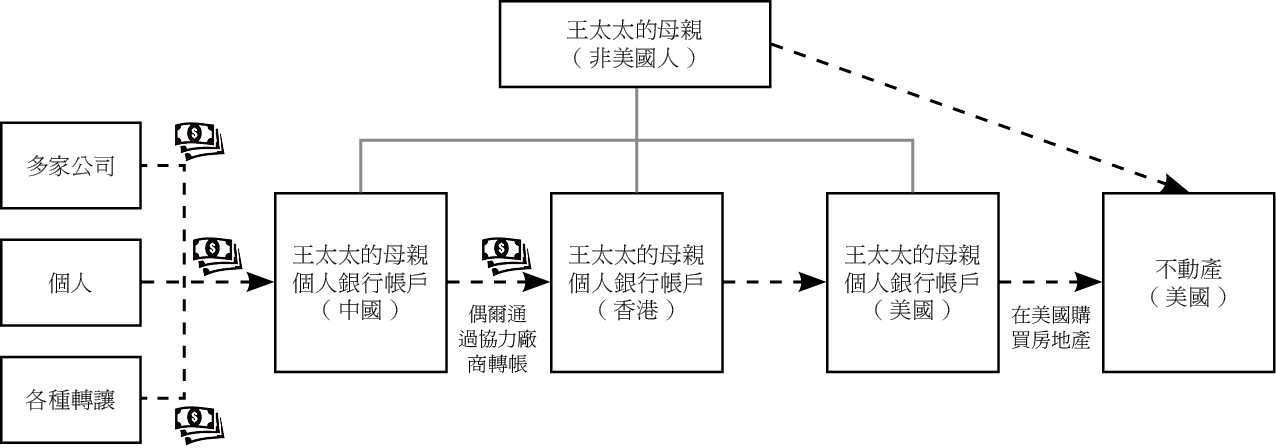
對傳承的省思:
1. 在中國常見借名他人持有財產的架構,但這可能對財富保全及轉移帶來一些重大障礙。
中國的創富者習慣向他人(「出名人」)借名持有資產,因為他們(即「借名人」)認為這樣做的風險極微。儘管在中國,借名的做法很普遍,但借名持有中國境外資產的創富者可能會面臨相當大的挑戰。
與中國不同的是,根據美國法律,若創富者要挑戰出名人對資產所有權的正當性,需要在法律上針對該資產提出合理的權利主張,但「代他人持有資產的協議」在美國可能被視為不足以證明借名人對資產具有所有權。因此,一旦出名人的忠誠度有疑慮,資產的實際所有權人在主張其所有權時,得預期會面臨相當大的挑戰。
假設出名人對借名的創富者保持忠誠,亦有可能因為出名人的健康狀況而有疑慮。若出名人在持有大量資產時去世,該等資產可能 (1) 在美國被課徵巨額稅款,或 (2) 根據出名人的遺產或遺囑而成為分割的標的。在許多情況下,出名人的家人可能不願配合或甚至對出名人與實際所有權人之間的安排一無所知。
最後一個考量點為出名人的法律地位。我們在過去曾遇過即使是創富者亦未知悉出名人在美國或其他司法管轄區已取得新的公民身分或永久居留權(綠卡)。這種情況雖然罕見,但如未適當監督或管理,可能對創富者造成相當大的稅務風險。
2. 將資產移轉到美國時,創富者必須解釋其財富來源。
在開立美國帳戶或將現金轉入美國帳戶時,創富者通常必須申報其財富來源及其開戶時的估計總資產淨值。當移轉金額超過 100 萬美元時,建議創富者洽詢合格專業人士以協助該移轉。此外,亦應尋求熟稔協助客戶收受來自美國境外的大額資金移轉的專業人士。一旦資產進入美國的管轄範圍,金融機構本身、美國財政部或甚至國稅局均可能會質疑資金來源,或要求提供過往轉帳或繳納所得稅之證據等額外資料,而稱職的專業人士除得製作相關文件外,亦得協助客戶對前述機構所提出的問題提供適當的書面回覆。
3.創富者通常希望能快速開設銀行帳戶,俾利以外國親戚、朋友或同事的名義購買美國房地產及金融產品。
創富者可能將此視為在美國投資的機會,並同時最小化其在美國稅務的曝險程度及揭露義務;然而,許多人可能誤以為美國不會對持有美國資產的外國人課徵遺產稅。
此外,房地產經紀人或投資管理從業人員常常基於達成其自身的訴求(主要是佣金及手續費收入),而催促創富者快速轉移資金,卻未先充分理解或解釋其所建議的交易在稅務及法規層面的相關後果;甚至可能會使用像是「別擔心,會計師能解決您的疑慮」的話術。
為求最小化稅負的不利影響及法規風險,我們建議創富者在轉移資產到美國的 6 ~18 個月前尋求能全面處理財富轉移的顧問團隊,其應配置能分析美國所得稅、遺產稅及贈與稅的會計師、能分析跨境交易法律架構的律師、以及能管理美國及海外資金移轉(通常透過香港及新加坡的金融機構)及能提供客戶財富來源充分佐證的秘書等人員。
傳承架構分析:
為了將財產從王女士的母親移轉給王女士、王女士的子女或在美國的信託,需考量許多稅務議題。此外,個人持有資產可能進一步成為美國贈與稅及遺產稅的課徵標的;且如有法律糾紛,其亦可能會成為債權人的請求標的。最後,出名人可能有其他繼承人,而繼承人可能知悉或不知悉借名財產事實上並不屬於出名人。下圖摘要本案例可能涉及的資產移轉方式及其在稅務及法律層面的影響:
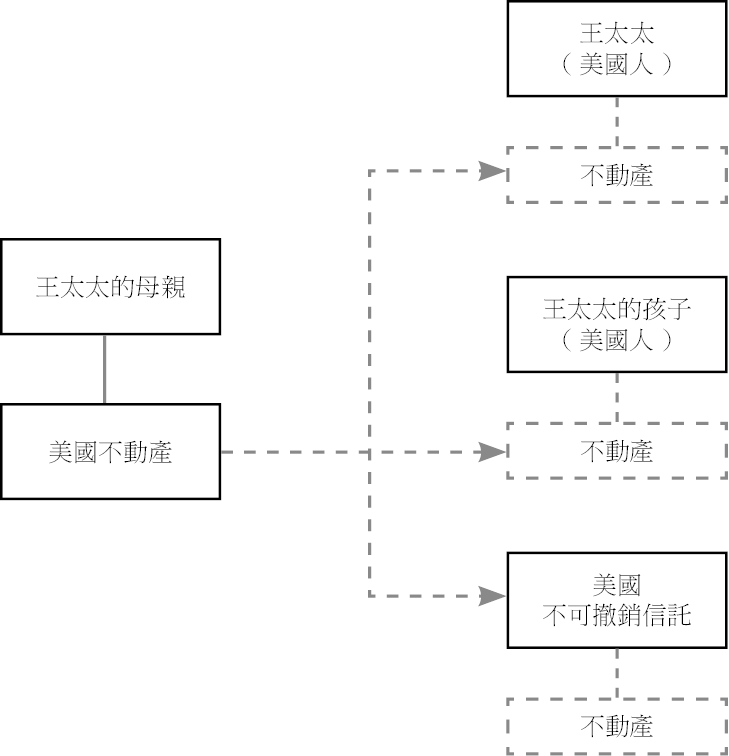
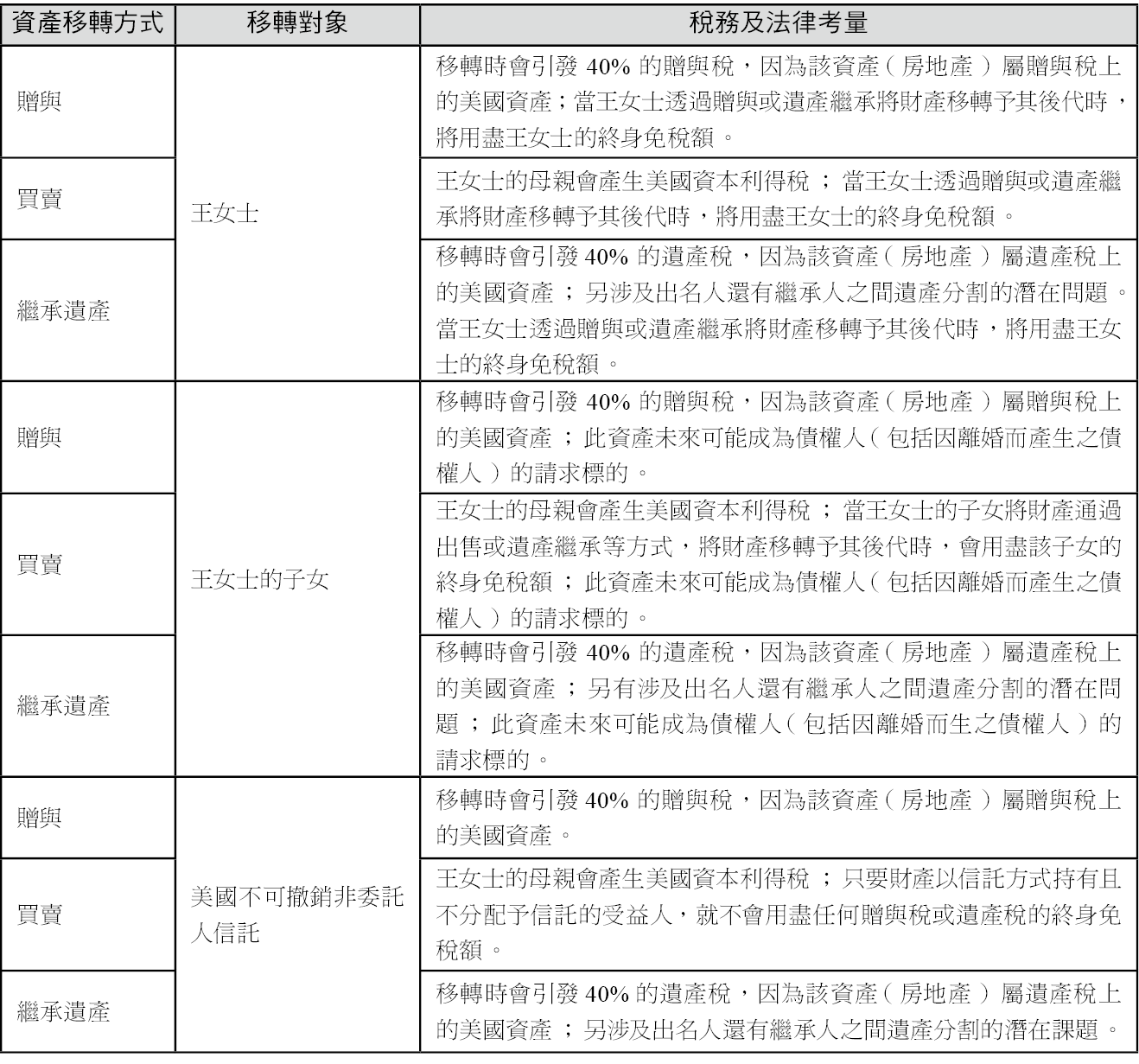
注1:稅負通常是按贈與或繼承時的市價(而非成本)計算,而房地產通常是由其所在地司法管轄區的執業房地產估價師進行鑑價。
注2:上述提到的終身免稅額是指美國人可享有的統一贈與稅及遺產稅終身免稅額。
經傳承規劃後,王女士的資產結構如下:
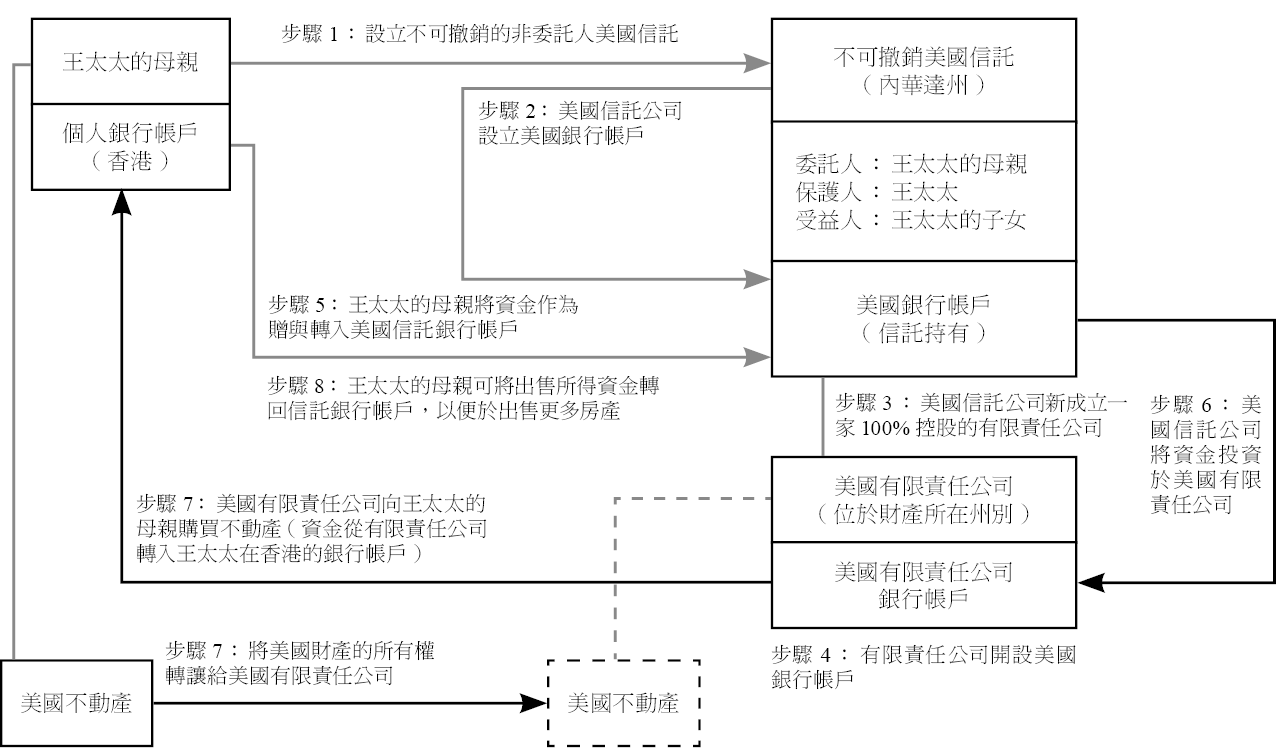
若王女士的母親將房地產贈與給王女士或美國不可撤銷信託,則房地產贈與稅按其市價計收並適用40%稅率。若王女士選擇維持原本的資產架構,王女士母親去世時,其繼承人將被課徵40%的遺產稅。為避免被課徵美國的移轉稅,王女士應該設法從先前的交易解套。
案例背景:
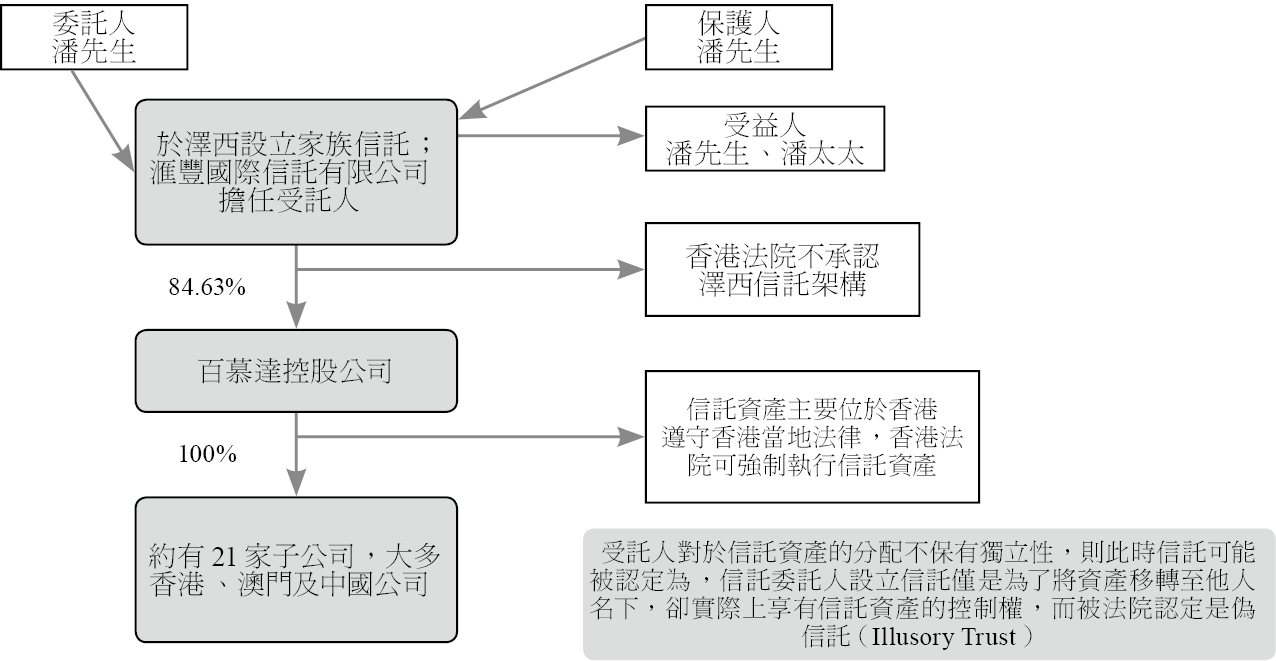
在過去幾十年裡,創富者經常使用在不同司法管轄區設立的離岸信託來保護他們的資產。安樂工程集團的創始人潘樂陶先生在1995年根據澤西島法律設立一個不可撤銷的裁量型信託。他是該信託的委託人、保護人及多位受益人之一,而滙豐國際信託有限公司是該信託的受託人。信託設立後,他將其持有的約85%安樂工程集團股權贈與給此信託。
然而,由於潘先生對信託資產仍然保持有效控制,香港終審法院裁定該些信託資產應計入他的婚姻財產。因此,該信託未能達到他預期的資產保護的目的。
對傳承的省思:
前述的法院判決震驚了許多創富者,因為他們以前認為無論他們是否對信託資產持有高度控制,其資產都將受到離岸信託的徹底保護。
1. 離岸信託架構通常有三種類型:
在設立離岸信託時,創富者應評估各個司法管轄區的利弊。若因信託關係而涉訟,通常是在信託受託公司所在地(而非信託資產所在地)的司法管轄區起訴。尋求透過設立信託以保護其資產的創富者應尋求具強有力判例法的司法管轄區作為提供這些保障的基礎。
在架構(1)中,私人銀行家及財富管理公司會試圖推薦以下信託: (A)最大化投資顧問對信託的控制權,(B)最小化信託的納稅義務,及(C)最大化委託人保留的權力。由於委託人通常保留絕大多數的權力(包含投資暨分配信託資產的權力及決定信託受益人的權力),這些類型的信託通常缺乏獨立性。由於缺乏獨立性,許多管轄法院可能會認定該類信託不存在,且因為設立人仍保留其在「已贈與」給信託的資產上的權益,會導致信託資產得被分配給委託人的債權人。這些信託通常被稱為「偽信託」。
在架構(2)中,由於此類信託的主要目的是保護信託資產並將資產轉移給信託的受益人,因此權力通常被明確界定,而委託人僅保留最少的權力甚至沒有權力。我們建議尋求建立此類架構的家族在所有適用的司法管轄區內諮詢稱職的法律顧問,以確保信託持有的資產得到保護,並且信託會被視為獨立於信託委託人、保護人及受益人的獨立實體。
在架構(3)中,創富者可能會被說服在離岸司法管轄區甚至在美國設立私人信託公司(PTC)。雖然 PTC 可以,且通常確實提供特定保障,但它們通常隨之而來的就是巨額的設立及維護成本(通常每年超過20萬美元)。由於PTC的高度客製化且極其複雜,可能不適合大多數家族,且無疑會使跨境財富轉移過程變得更加艱巨。
2. 雖然許多司法管轄區為委託人提供保留特定權力的彈性以爭取業務,但離岸信託(通常在離岸島嶼或領土上設立)通常提供最大的彈性。多年來,這被視為專業人士(尤其是專門從事離岸信託的律師)的福音;然而,本案顯示,高度的控制可能導致其他司法管轄區全然無視於信託架構的存在。信託被認定為 「偽信託 」的風險正在增加,因為越來越多的司法管轄權區認知到,離岸信託僅是名義上的信託,而非實質上的信託。
傳承架構建議:
調整前的離岸信託架構
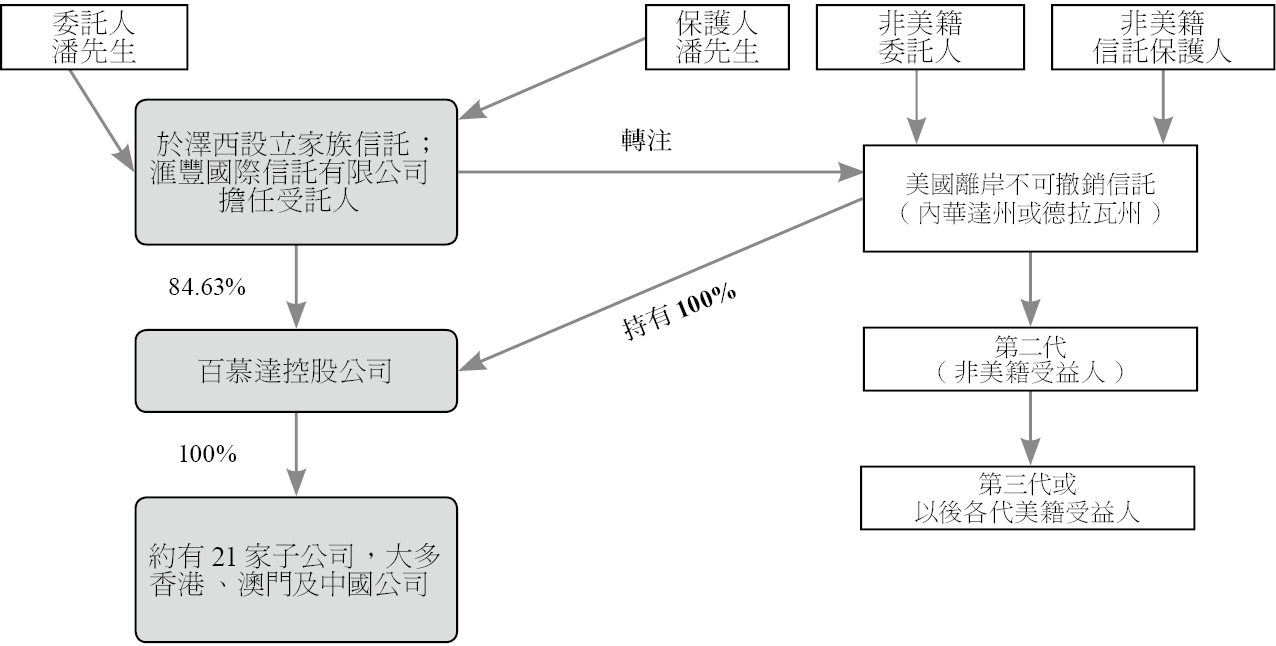
建議架構
傳承架構分析:
儘管富裕家族長期以來一直非常仰賴離岸信託,但仍需謹記在追求對信託的掌控之際,亦應兼顧信託資產的保障。若信託的委託人對信託保留許多權力,法院可能會對信託持懷疑態度,或者在最壞的情況下,否認信託的存在。這可能會導致債權人向法院聲請扣押資產。以下步驟對於確定信託是否能夠發揮其功能並保護資產免受潛在債權人的侵害至關重要:
1. 在審閱信託合約時,顧問通常著重信託委託人的意向。通常設立信託是為了保障委託人的資產或降低稅務相關風險。另一個需要考慮的重要面向是信託委託人及其後代當前及未來的稅務居住地。我們特別建議有美國受益人的家族在擬定信託合約時應尋求稱職的美國稅務顧問,以確定離岸信託的稅務影響。
2. 信託合約擬定時,應使信託委託人不具有危及信託獨立性的權力。若信託合約訂有信託保護人(通常是負責信託最有影響力職能的受託責任人),則信託委託人及信託受益人不應同時擔任信託保護人,以降低信託被視為偽信託或無效信託的可能性。
3. 在籌劃包含信託在內的家族傳承架構時,顧問應考量對信託委託人、信託保護人、受益人及信託本身的潛在贈與稅及遺產稅後果,否則可能會導致不利的稅務後果。
4. 對於與美國有連結的家族(例如家族有一個或多個美國信託委託人、信託保護人、受益人或資產),我們會建議其評估美國信託與離岸信託架構的利弊。對於擁有離岸信託的家族,我們會建議其評估將信託遷移至美國或將資產轉注到美國信託的可能性。雖然這通常需要美國及非美國律師的協助,但由於美國司法管轄區的相對穩定性及其信託法律保障的一致性,在絕大多數的情況下是值得創富者作此努力的。
5. 美國信託(包含為美國所得稅目的而在美國設立的外國信託)通常由信託設立地該州的律師撰擬或審閱。該些律師通常亦會對信託的獨立性提供意見;稅務律師則通常也會針對潛在的美國稅務影響另行提供意見。
案例背景:
江先生及江夫人是居住在中國的一對夫婦;在申請綠卡十多年後,他們終於收到取得美國永久居民卡(綠卡)的通知。由於過往不確定是否會取得綠卡,因此從未考慮過美國居留身分的稅務後果。當他們來到美國時,他們諮詢了值得信賴的美國註冊會計師。會計師告訴他們, 他們的全球資產現在將有義務申報美國所得稅、贈與稅及遺產稅,這使其難以置信。
對傳承的省思:
1. 在過去幾年裡,香港、澳大利亞及加拿大的移民政策越來越嚴格。美國頒布的EB-5讓許多尋求永久定居的中國家庭鬆了一口氣。稅務顧問經常建議創富者保留他們原來的公民身分及稅務居民身分,而讓他們的配偶申請綠卡,因為美國通常對其居民徵收更重的稅。然而,由於許多中國人認為已婚夫婦應該永不分離,因而常見創富者及其配偶都取得綠卡。
2. 一旦外國人獲得綠卡並成為美國稅務居民,不僅要對其全球收入繳納美國所得稅,還須根據許多美國法律及法規對其離岸資產進行揭露。許多人想知道是否有辦法取得美國永久居留權而不需負擔隨之而來的巨額稅款及揭露責任。對於那些在美國境外創造財富的人來說,有沒有一條途徑是可以在不支付可觀的所得稅、遺產稅及贈與稅的情況下取得美國公民身分?
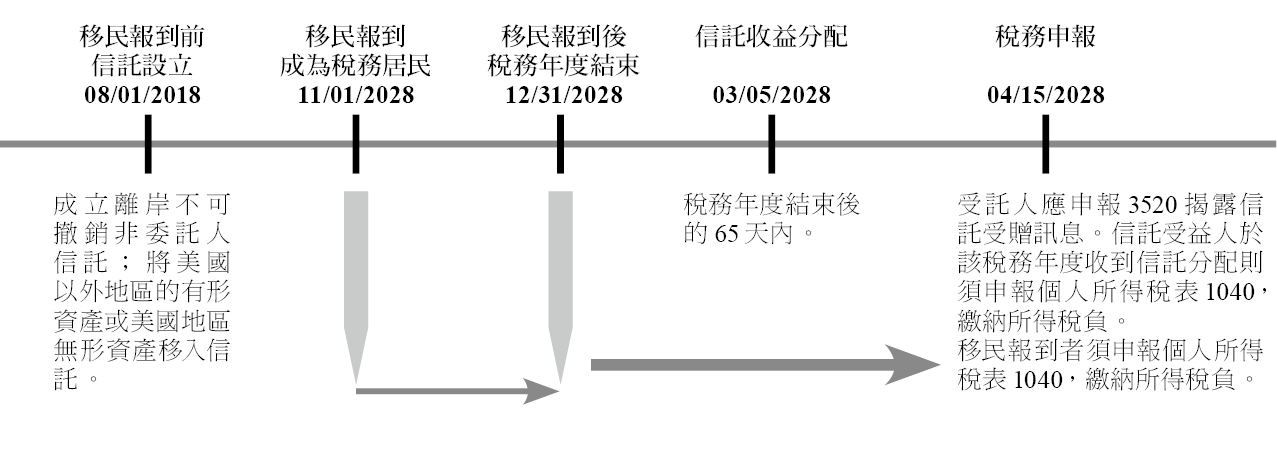
傳承架構建議
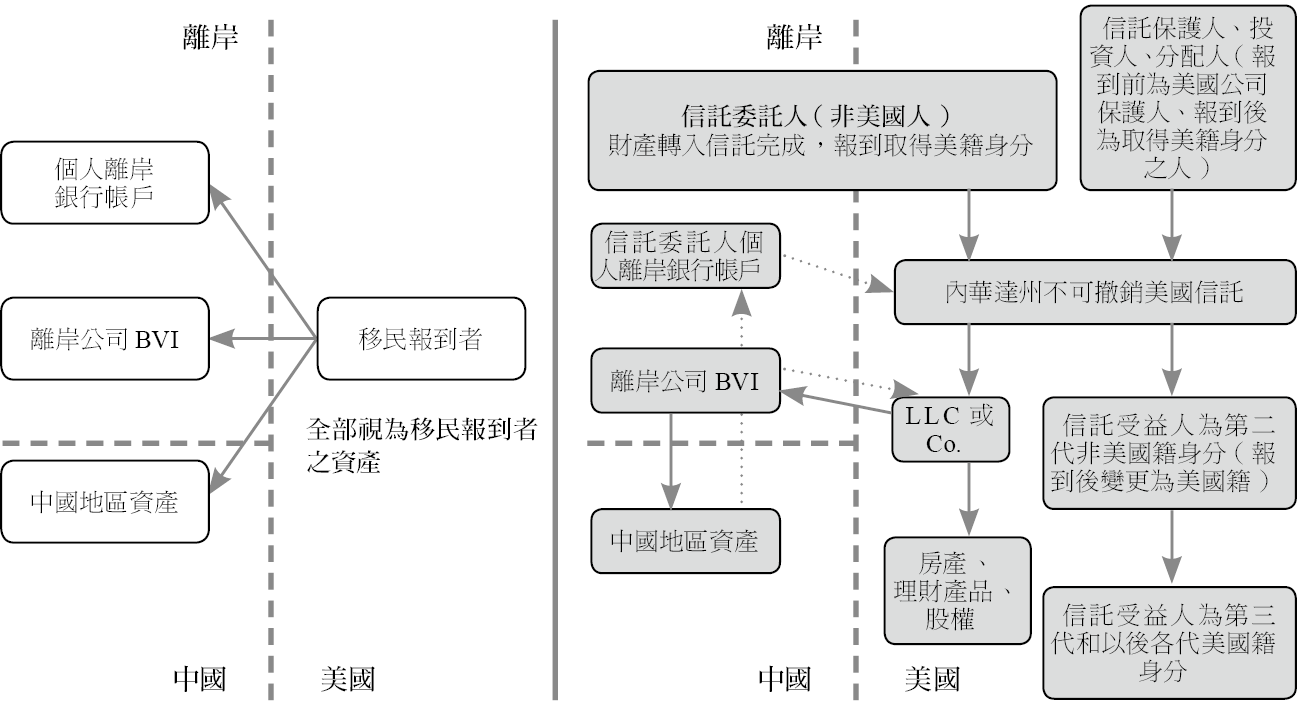
傳承架構分析:
1. 計劃移民美國的富裕家族通常會考慮投資美國房地產。在成為美國人之前,創富者應諮詢稅務及法律顧問,商議達到兼顧稅負最小化及資產保障的可行選項。
2. 移民到美國的家族通常希望將其部分或全部財富從國外司法管轄區轉移到美國。我們通常建議擬移轉超過200萬美元的家族尋求有執照的專業人士的指導,以增加對美國稅務及法律制度的理解。
3. 對於將前往美國且擁有大量財富的個人,設立美國非委託人信託可能有助於兼顧稅負最小化及資產保護。資產超過美國贈與稅及遺產稅終身免稅額的個人,就超過額度部分的資產可能需要繳納 40%的遺產稅。此項稅負對個人在移民美國以前及之後獲得的資產均予以課徵。此外,如果個人希望將超過終身免稅額的資產贈與或留給比自己小37.5歲的人,可能要另外負擔額外的美國隔代移轉稅(GST)。
4. 在設立特定類型的美國信託時,個人及公司均得被指定為受託責任人。美國信託通常由其委託人設立及資助,治理權則分配給信託的受託責任人(通常是信託保護人、分配顧問及投資指示顧問等)。
信託的受益人可根據信託合約的規定自信託獲得分配(進一步分類為分配收入或分配本金)。為保全資產,許多信託合約設計使受益人在法律上無權獲得任何分配,並且置入信託的分配顧問對支付給信託受益人的任何分配金額有絕對裁量權的條款。如此通常得保障信託資產使其免受信託受益人之債權人的主張。
注:有關美國信託中各種角色及責任的詳細說明,請參閱第二章有關「決定內華達州不可撤銷信託中的角色」的段落。
在指示型信託中,受託人通常負責信託的行政及秘書職能。我們多會建議創富者尋求有專業執照的信託公司作為受託人。如此可以確保信託受到持續的管控,且各種秘書職能受到監督。擔任指示型信託受託人的信託公司通常收取固定的年費,而非按所管理資產的一定百分比收取費用。
5. 由於來自非美國人所獲之贈與通常免稅,考慮贈與超過200萬美元的創富者應考慮贈與給指定受益人信託,而不是直接贈與給該受益人;由於受贈人是信託本身而不是個人,信託的受託人須填寫3520表申報此項贈與。相較於個人接受大額贈與,信託接受大額資金較為常見,因而在此情況下受到審查的可能性較小。
6. 從外國信託獲得分配或控制外國信託的美國人經常面臨不利或甚至懲罰性的美國所得稅後果。因此,尋求移民美國的創富者應考慮解除其外國信託而改採美國信託。即使是個人不打算移民美國但後代具有美國身分的創富者,亦應該考慮將其資產轉移到美國信託,因為從資產保護及美國稅務的角度來看,美國信託通常更保護具美國身分的後代。若妥當規劃,將資產轉移到美國信託可帶來(1)更清晰的財富轉移架構,(2)較有利的稅務待遇,(3)較有力的資產保護,及(4)較低的維持成本(與受託人費用、會計及揭露要求有關)。